
Could a Robocab Replace the Car in Your Driveway?
Could paying for driverless rides replace a second car and help you stay independent? Compare the costs, check the return trip, and try a two-week test before giving up the keys.
About 6 minutes to read
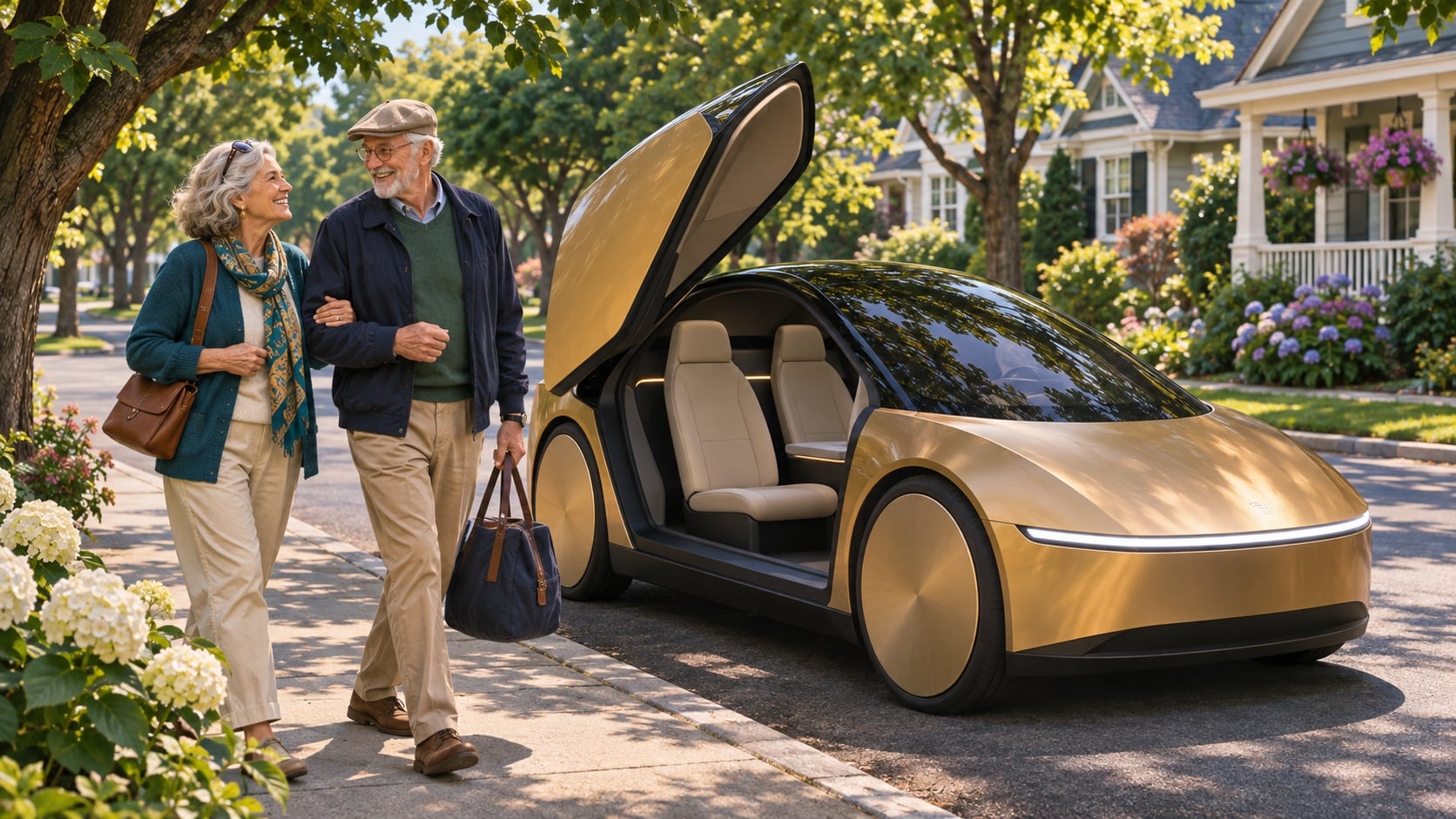 Think of a trip you make on the spur of the moment. You drop in on a friend, head to the tennis courts, or go back out for something you forgot at the grocery store. The freedom is in deciding to go without asking somebody first.
That freedom is easy to take for granted while you drive. In a U.S. study of nearly 7,000 older adults, people who stopped driving were more likely to become socially isolated. That study doesn’t tell us whether robocabs would help. It does tell us what’s at stake when getting out the door becomes harder. Study on driving cessation and social isolation
I’m watching a shift sometimes called Transportation as a Service. Instead of paying to keep a car available all year, you pay for rides when you need them. Driverless fleets could make that a better option in some places. My guess is that the first car they’ll replace in many households is the second one. That’s a smaller leap than giving up the keys altogether.
What kind of sharing are we talking about?
A fleet robocab can serve many households in a day, even if you have the car to yourself on your trip. A pooled ride carries passengers from different households at the same time, potentially lowering the fare in exchange for a detour. And sharing ownership with two neighbours is different again: you split the costs of keeping one car and have to decide who gets it on Saturday morning. The fact that a car sits idle most of the week doesn’t tell you whether it’s free when all three households want it some some kind of coordination would be needed – maybe an app?
Tesla’s limited invitation to buy a personal Cybercab points to a fourth possibility: having your own driverless car waiting at home. That might eventually suit people who want the convenience of a car on their own schedule. The personal-use offer is an early test of that idea, not a lease offer or permission to put one to work as a cab. Tesla’s Cybercab terms
What the early rides tell us
TechRadar’s account of Tesla’s first Austin rides was from June 2025. The riders were invited, the area was limited, and a Tesla employee sat in the passenger seat. Today Tesla lists rides in the purpose-built, two-seat Cybercab in limited parts of Austin. Waymo has opened fully driverless rides to the public in markets including Miami and Orlando, within defined service areas. Tesla’s Cybercab FAQ · Waymo’s Florida rollout
China offers another view. Associated Press reporters took a Pony.ai ride in Shenzhen. It was a real trip in city traffic, but they could travel only between designated points. The app gave them about a minute to get in, and the low fare included a first-ride discount. Pony.ai and Toyota also announced a commercial launch of a new driverless model in Guangzhou. China is definitely pushing the implementation of driverless options – which is no doubt good for global competitive pressures re price and capabilities.
The economics are about more than the driver
U.S. travel data found that household vehicles spent 95% of a typical day parked in 2022. (U.S. vehicle-use data ) A fleet can put the same car to work for more households, spreading its cost over more trips. But a robocab still needs insurance, cleaning, charging, repairs and someone who can help when a trip goes wrong. It also drives empty between some rides. A neighbourhood with plenty of nearby trips may be much cheaper to serve than one where the car must travel miles just to pick you up.
A smaller fleet doesn’t automatically mean less traffic. In the Lisbon simulation, traffic increased in most scenarios even though fewer vehicles were needed. The results depended on whether riders shared trips and whether strong public transit remained. There is something to be said for robo-taxi fleets that help people reach a train or a bus, rather than assuming every transit trip should become a car trip.
The personal Cybercab is a useful example of what changes when the household takes on fleet chores. WIRED raised the ownership question: you may own the hardware, yet still depend on a software subscription and the operating areas the provider enables. Electrek looked at charging. Tesla’s current order agreement specifies DC fast charging, so you can’t assume a regular home EV charger will do. Those are two things the operator handles when you buy a ride instead of a car. (see Tesla’s purchase agreement)
There’s also the idea of earning money by sending your own car out between trips. A Tesla App reported a possible early trial, without confirmed eligibility or a revenue split. The personal Cybercab agreement restricts commercial use unless Tesla specifically allows it, and its order terms limit who can use the car without the owner present. That makes three-household sharing a scenario to explore, not something to assume the current offer permits. But letting your Cybercab out as a future possible rental income source is an intriguing prospect!
When would paying by the ride beat owning?
In the November 19th RS Briefing’s worked example, a car bought for US$30,000 and sold five years later for US$10,000 loses US$4,000 a year in value. Add another US$4,000 in assumed running costs and you’re at about US$667 a month. The Briefing also modelled what might happen if three households split the cost of one car. Here’s the separate question I’d ask about a fleet service: How many rides would that US$667 buy?
| Illustrative monthly budget | Cost |
|---|---|
| 20 one-way rides at US$20, plus US$100 for backup transport | US$500 |
| 30 one-way rides at US$20, plus US$100 for backup transport | US$700 |
| Keep the car in the Briefing example | About US$667 |
The break-even is about 28 one-way rides, or 14 round trips, under those assumptions. The US$20 is an example, not a forecast or a fare quote. If your paid-off car costs US$300 a month to keep, including what it still loses in value, the same ride and backup assumptions put you at break-even after 10 one-way rides. And if you’d keep paying the insurance, parking and depreciation anyway, an occasional robocab replaces a trip, not those bills. Use your own currency and local prices. CAA’s driving cost calculator · (How Waymo prices rides)
The retirement test: can you get home?
You don’t need a robotaxi in your town to test the idea. Before replacing a lightly used car, try covering two normal weeks with whatever rides, transit and rentals already exist. Count what you spend and what you skip. Include one evening outing and a trip in bad weather if you can. I’d trust that little trial more than a forecast about when driverless cars will arrive.
The change I’m looking for is simple: more people keeping the freedom to go out on their own terms, whether they own a car or not.
Get the free weekly Retirement Singularity Briefing for my take on what’s changing and what’s worth putting on your retirement map.